
What Is Emotional Abuse?
Emotional abuse is not always easy to recognize.
There may be no bruises. No broken things. No single moment you can point to and say, this is where it became wrong.
Sometimes it happens so slowly that you begin adjusting to it before you even realize what is happening.
You start questioning yourself. Explaining yourself more. Making yourself smaller to avoid conflict. And little by little, you may lose trust in your own feelings, memories and instincts.
Common Signs of Emotional Abuse
Emotional abuse can look different in every relationship, but some patterns may include:
- Constant criticism or belittling
- Making you doubt your own perception or memory
- Controlling your choices, friendships or behaviour
- Blaming you for problems you did not create
- Withholding affection as punishment
- Using guilt, fear or silence to control you
- Making you feel that you are “too sensitive” or always overreacting
You can read more about the signs of emotional abuse at The National Domestic Violence Hotline.
One of the things that makes emotional abuse so difficult to recognize is that these behaviours can exist alongside affection, laughter and genuinely good moments.
That can make the situation incredibly confusing.
Why Is It So Hard to Recognize?
Because emotional abuse does not necessarily feel terrible every single day.
There can be apologies. Tenderness. Promises. Beautiful days when everything feels normal again.
And those moments can make you wonder whether the painful ones were really that bad.
You may find yourself thinking:
Maybe I misunderstood.
Maybe I am too sensitive.
Maybe if I communicate better, things will change.
But a healthy relationship should not require you to continually abandon yourself in order to keep the peace.
Emotional Abuse Can Exist Alongside Love
One of the most confusing things about emotional abuse is that the relationship may not feel unhealthy all the time.
There can still be affection, laughter, tenderness and moments when you feel deeply connected. The person who hurts you may also be the person who comforts you. That contradiction can make it incredibly difficult to understand what you are experiencing.
You may think that if someone truly loves you, their behaviour cannot be abusive. Or you may compare the good days with the painful ones and convince yourself that the relationship is mostly okay.
But good moments do not erase harmful patterns.
What matters is not whether someone is loving sometimes. It is whether you consistently feel safe to be yourself, express your feelings, set boundaries and disagree without being punished, frightened or made to doubt yourself.
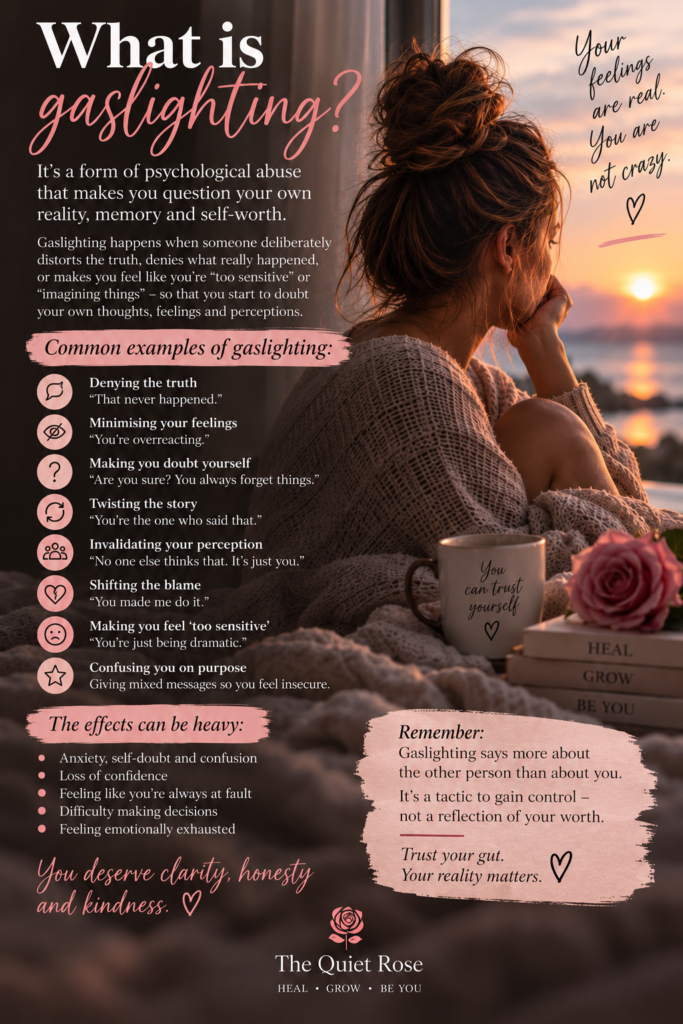
When You Begin to Question Yourself
Emotional abuse can slowly change the way you see yourself.
Instead of asking, “Why are they treating me this way?” you may begin asking, “What am I doing wrong?”
You might apologize when you have done nothing wrong. You may spend hours replaying conversations in your mind or trying to find the perfect words so that the next conversation will go differently.
Over time, your attention can shift away from what you need and feel and toward constantly managing the other person’s reactions.
That loss of trust in yourself can be one of the deepest effects of emotional abuse.
But it can also be rebuilt.
What Emotional Abuse Can Do to You
Over time, you may stop trusting yourself.
You may become hyper-aware of another person’s mood. You might rehearse conversations before having them, worry about saying the wrong thing or feel relief when someone is simply in a good mood.
Your boundaries can slowly disappear.
You may stop saying what you really think because keeping the peace feels safer. You may accept things you once believed you never would.
And sometimes you don’t realize how much of yourself you’ve lost until you begin finding yourself again.
You Deserve Clarity, Not Confusion
Recognizing unhealthy patterns doesn’t mean you have to have every answer today.
You don’t need to put a label on everything immediately. And you don’t need to justify your feelings before you’re allowed to listen to them.
Sometimes the first step is simply allowing yourself to notice what you feel.
Your feelings matter.
Your boundaries matter.
You deserve relationships in which you can speak, disagree, grow and still feel safe being yourself.
And love should never require you to disappear in order to keep it.
Behind the thorns, a rose still grows. 🌹